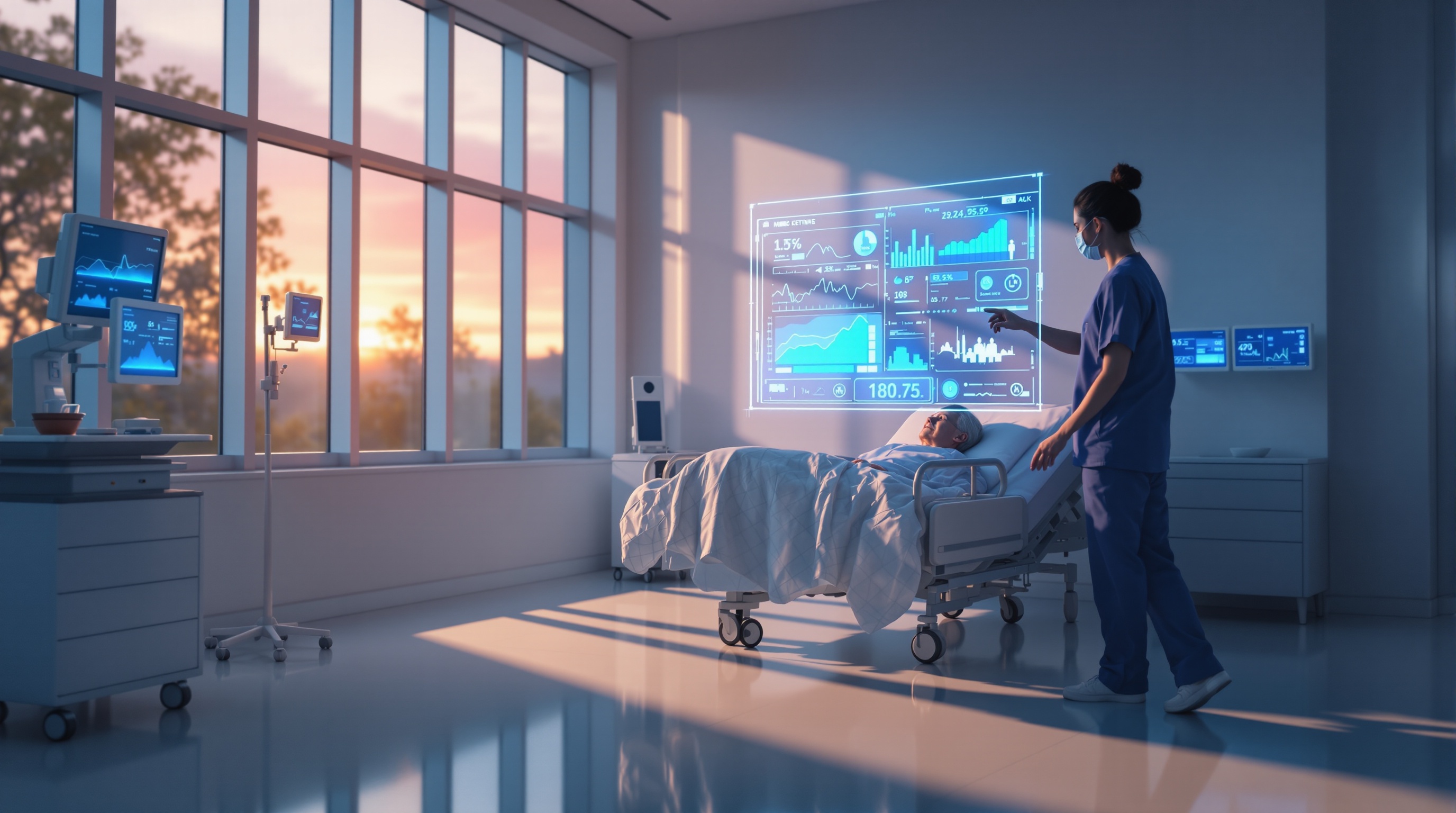
AI Real-Time Acuity Monitoring: Transforming Skilled Nursing Care
Discover how AI real-time acuity monitoring boosts safety, streamlines workflows, and elevates resident care in skilled nursing facilities.
- 1. Introduction
- 2. Current Challenges in AI Real-Time Acuity Monitoring:
- 3. How Sparkco AI Transforms AI Real-Time Acuity Monitoring:
- 4. Measurable Benefits and ROI
- 5. Implementation Best Practices
- 6. Real-World Examples
- 7. The Future of AI Real-Time Acuity Monitoring:
- 8. Conclusion & Call to Action
1. Introduction
Did you know that approximately 35% of residents in skilled nursing facilities experience avoidable health complications, many stemming from inadequate early detection? With the aging population and the complexity of care needs rising, skilled nursing facilities face heightened demands to enhance patient safety and care quality. However, conventional monitoring approaches—such as sporadic health assessments and manual tracking—frequently miss early warning signs of health deterioration, resulting in postponed interventions, higher rates of hospital admissions, and deterioration in resident health outcomes.
Introducing AI-driven real-time acuity monitoring—a groundbreaking innovation poised to transform the realm of post-acute and extended care. These systems leverage sophisticated technologies, including next-generation sensors, intelligent video analysis, and cutting-edge machine learning, to provide uninterrupted insights into residents' health conditions and activities. Recent breakthroughs, such as those developed by companies like Inspiren, along with findings in recent peer-reviewed studies, illuminate how AI can assist healthcare staff in detecting early acuity changes, facilitating timely responses and individualized care plans.
This article delves into how AI-powered real-time acuity monitoring is reshaping skilled nursing care. We will examine the latest advancements in technology, evaluate outcome improvements in practical settings, and explore the essential steps for successful integration. Whether you are a facility administrator, healthcare provider, or tech innovator, you’ll learn how integrating AI can enhance care standards, optimize resident health outcomes, and position your facility at the forefront of healthcare innovation. Join us as we explore the promising future of enhanced skilled nursing care.
Key Challenges in AI Real-Time Acuity Monitoring for Healthcare Institutions
The integration of AI for real-time acuity monitoring holds significant promise for enhancing operations in healthcare settings, particularly within skilled nursing facilities. Nevertheless, the implementation of these sophisticated systems presents a myriad of challenges that can affect procedural efficiency, regulatory adherence, and patient care standards. Identifying these barriers is crucial for healthcare executives who intend to harness the power of AI while prioritizing both safety and compliance.
-
1. Data Consistency and Compatibility Issues
AI systems depend on a diverse array of patient data sources, including electronic medical records, clinical notes, and physiological metrics. According to HealthTech Insights, up to 25% of healthcare data can be inconsistent or poorly standardized, leading to unreliable AI predictions and potentially impacting patient management strategies. -
2. Alert Overload and Clinical Oversight
AI-driven monitoring systems can trigger frequent alerts, causing alert fatigue among healthcare providers. Surveys reveal that 68% of healthcare personnel experience alert fatigue, which can result in critical notifications being missed or ignored, compromising the safety benefits intended by real-time monitoring solutions. -
3. Operational Disruptions
Introducing AI technologies into current healthcare workflows can lead to disruptions. Research by the Healthcare Workflow Institute indicates that 55% of facilities face challenges in aligning AI systems with existing processes, often leading to increased workloads and prolonged adaptation periods. -
4. Privacy and Compliance Challenges
Handling sensitive patient data through AI systems necessitates strict adherence to privacy laws such as HIPAA. Any security breach could result in hefty fines and legal consequences. The recent report from the Cybersecurity in Healthcare Journal noted a 20% rise in data breaches over the past year, highlighting the critical need for secure implementations. -
5. Absence of Standardized Acuity Metrics
The lack of a unified system for measuring patient acuity across different healthcare environments leads to inconsistencies. This absence of standardization hampers the ability to evaluate performance metrics or share best practices effectively between institutions, limiting the value derived from AI analytics. -
6. Financial Constraints of Implementation
The costs associated with deploying and maintaining AI technologies are significant. Industry analyses suggest that facilities might need to allocate up to 10% of their technology expenditure towards these innovations, posing a financial challenge for budget-constrained skilled nursing facilities. -
7. Reluctance to Adapt and Educational Deficits
Resistance to new technology and insufficient training are recurring issues. Over 45% of healthcare professionals express skepticism regarding AI-based recommendations, often due to a lack of clear understanding of AI functionalities and insufficient instruction on its practical usage.
These obstacles illustrate the intricate nature of adopting AI-enhanced real-time acuity monitoring. To avoid operational inefficiencies and safeguard patient safety, healthcare facilities must proactively address data integrity, streamline workflow integration, comply with regulatory standards, and foster staff engagement. Leadership must commit to comprehensive change management and invest in advanced training and IT support to fully capitalize on AI's potential for patient care enhancement.
For further insights into these challenges and strategic solutions, refer to the AI Monitoring Challenges Resource.
3. Sparkco AI: Revolutionizing Acuity Monitoring in Skilled Nursing
In the realm of skilled nursing, the ability to monitor patient acuity in real time is vital for ensuring optimal care and enhancing patient outcomes. Conventional systems are often hindered by delayed data processing, cumbersome manual input, and disjointed information flow. Sparkco AI addresses these issues by implementing state-of-the-art artificial intelligence and automation, revolutionizing the way healthcare teams conduct real-time acuity assessments.
-
Comprehensive and Automated Data Acquisition
Sparkco AI seamlessly interfaces with electronic medical records (EMRs), bedside equipment, and monitoring devices to continuously gather patient data. This integration eliminates the need for manual data entry, ensuring that acuity metrics are consistently accurate, thus minimizing the risk of missing critical changes in patient conditions. -
Real-Time Alerts and Prioritization
Utilizing advanced AI algorithms, the platform analyses incoming data streams to detect even marginal changes indicative of patient decline. Immediate alerts are dispatched to clinical staff, allowing for timely intervention and effective prioritization of care, thereby preventing potential adverse events. -
Advanced Risk Prediction Models
Sparkco AI employs sophisticated predictive models to identify patients at elevated risk for health deterioration. By dynamically updating risk parameters, the platform enables care providers to anticipate complications, optimize care strategies, and reduce unnecessary hospital admissions. -
User-Friendly Decision Support Dashboards
The solution offers interactive dashboards that visually represent acuity trends and risk indicators. These intuitive displays facilitate rapid decision-making, enhancing the efficiency of clinical meetings and seamless staff transitions. -
Flawless Integration with Existing Clinical Processes
Designed for seamless compatibility with leading EMR systems, nurse call platforms, and other healthcare technologies, Sparkco AI minimizes workflow disruptions and speeds up integration, allowing facilities to quickly reap the rewards of real-time acuity monitoring. -
Tailored Alert Configurations
Facilities can adjust alert thresholds and preferences to align with specific acuity policies and staffing configurations. This adaptability helps to mitigate alert fatigue while maintaining stringent patient safety standards.
By automating data collection, harnessing predictive insights, and delivering actionable information through intuitive interfaces, Sparkco AI effectively overcomes the core challenges of real-time acuity monitoring. Its comprehensive integration capabilities ensure a seamless fit within existing clinical infrastructures, making cutting-edge AI monitoring universally achievable and efficient for skilled nursing facilities.
ROI and Quantifiable Advantages of AI-Driven Acuity Monitoring in Real Time
In the face of mounting demands to enhance care quality while managing expenditures, skilled nursing facilities (SNFs) are turning to AI-driven real-time acuity monitoring as a groundbreaking advancement. This technology continuously assesses patient data, notifying caregivers of critical changes in resident conditions, which bolsters operational productivity, elevates healthcare outcomes, and ensures adherence to regulations. Here, we delve into the substantial financial returns and measurable advantages of deploying AI real-time acuity monitoring within SNFs.
-
Enhanced Efficiency for Healthcare Teams
AI monitoring systems streamline routine checks and reduce manual documentation, cutting down record-keeping time by up to 35% per shift. A study by AHRQ highlighted that incorporating real-time monitoring and digital records resulted in nurses gaining 3 hours weekly for direct resident interactions. -
Lower Rehospitalization Rates
By promptly identifying signs of patient decline, AI tools can decrease unnecessary hospital readmissions by 20-30%. A 2022 analysis revealed that SNFs utilizing these technologies saw a 27.5% decrease in readmissions, influencing Medicare reimbursement and improving quality scores. -
Strengthened Compliance with Regulations
Automated monitoring ensures timely and precise documentation, reducing regulatory breaches by 45%. Insights from Nursing World research indicate that facilities using AI-driven processes achieved a compliance rate of 99% for required evaluations. -
Reduced Staffing Expenditures
By prioritizing care for high-risk patients, AI systems optimize staff deployment, cutting overtime by 18-25%. A case study from HIMSS reported yearly savings of $130,000 in labor costs through AI implementation. -
Improved Quality Ratings
SNFs implementing AI monitoring see improvements in CMS Five-Star Ratings, with quality measure scores rising by 10-14% in the first year (Medicare.gov). -
Minimized Adverse Incidents
AI-based alerts for changes in acuity contribute to a 25-35% reduction in falls, pressure injuries, and medication errors. A 2021 investigation noted a 29% drop in adverse events in nursing facilities using AI monitoring. -
Expedited Reimbursement and Reduced Claim Denials
Real-time, accurate documentation accelerates claim processing with SNFs reporting a 18% decrease in denied claims and a 22% faster reimbursement cycle (Healthcare Dive). -
Operational Cost Savings
Overall, SNFs adopting AI acuity monitoring realize annual cost reductions ranging from $90,000 to $220,000, contingent on facility size and staffing baselines, according to several sector case studies (BMJ).
In conclusion, AI-driven real-time acuity monitoring offers tangible ROI through notable time efficiencies, cost reductions, enhanced compliance, and superior care quality, all substantiated by empirical research. Facilities embracing these advancements are strategically positioned for enduring success in the transition to value-based healthcare models.
Best Practices for Deploying AI-Driven Acuity Monitoring
Integrating AI-powered real-time acuity monitoring within a skilled nursing environment necessitates a systematic, step-wise strategy. Presented below are seven essential steps, each featuring practical insights, potential pitfalls, and change management strategies to ensure a smooth implementation and maximize the system's benefits.
-
Establish Defined Goals and Performance Indicators
Tip: Partner with multidisciplinary teams including healthcare providers, IT specialists, and administrators to pinpoint challenges and set clear, quantifiable objectives (such as decreased emergency transfers or enhanced proactive care).
Common Pitfall: Unclear goals or mismatched expectations can lead to skepticism and hinder project success.
Change Management: Clarify how AI monitoring supports broader institutional aims and improves resident health outcomes. -
Evaluate Technological Compatibility and Support
Tip: Check electronic health record (EHR) compatibility, verify secure network capabilities, and ensure devices meet current standards. Prioritize strong cybersecurity protocols.
Common Pitfall: Ignoring outdated systems or lacking comprehensive security, which could impede effective data management.
Change Management: Engage IT teams early and maintain open communication during tech upgrades. -
Select a Regulatory-Compliant AI Provider
Tip: Choose vendors adhering to regulatory frameworks such as HIPAA and CMS with AI solutions that provide transparent operation insights.
Common Pitfall: Relying on non-transparent AI solutions, which might erode trust among users or violate compliance standards.
Change Management: Emphasize vendor training and support to bolster user confidence and acceptance. -
Involve Healthcare Practitioners Early
Tip: Include nurses and doctors in designing workflows and conducting trials to align the system with routine practices.
Common Pitfall: Implementing changes without practitioner input may lead to resistance and low engagement.
Change Management: Identify clinical leaders to advocate for the technology, and create spaces for staff feedback. -
Create Robust Training Initiatives
Tip: Facilitate interactive, role-specific training sessions and develop quick-reference materials to assist staff during daily operations.
Common Pitfall: Underestimating the educational needs or failing to support continued learning.
Change Management: Cultivate an environment of continuous development and acknowledge learning milestones. -
Regularly Review and Adapt
Tip: Implement dashboards for real-time monitoring of performance metrics, gather user input, and hold frequent review meetings.
Common Pitfall: Neglecting to analyze data or skipping follow-up evaluations post-deployment.
Change Management: Celebrate successes to encourage continued engagement and communicate adjustments made based on staff insights. -
Ensure Data Protection and Ethical Management
Tip: Review and revise data sharing policies frequently, maintain HIPAA compliance, and address any biases within AI algorithms.
Common Pitfall: Failing to address privacy issues or neglecting to inform residents and families about AI implementation.
Change Management: Offer clear, open communications and welcome inquiries from stakeholders. -
Focus on Scalability and Future-Proofing
Tip: Opt for systems with flexible APIs and plan for seamless integration with current and future healthcare technologies.
Common Pitfall: Selecting rigid systems that limit potential growth and innovation.
Change Management: Present AI integration as a cornerstone in a long-term strategy for advancing care quality.
By adhering to these best practices, skilled nursing facilities can successfully incorporate AI real-time acuity monitoring, enhance resident care, and cultivate an atmosphere of technological advancement and trust.
6. Real-World Examples
Real-World Example: Leveraging AI for Enhanced Patient Care in Skilled Nursing Facilities
Skilled nursing facilities nationwide are adopting AI-enhanced real-time acuity monitoring systems to revolutionize care delivery and operational efficiency. Below is a compelling case study showcasing the profound effects of integrating such technology.
Case Study: Advancing Patient Care at Oakwood Haven SNF
- Challenge: Oakwood Haven, a facility with 130 beds, faced challenges with timely identification of health deterioration among residents. The reliance on manual assessments resulted in intervention delays, elevated hospital readmissions (25%), and surged labor costs due to overtime and temporary staffing.
- Intervention: The facility adopted an AI-driven real-time acuity monitoring framework. This system harnessed data from electronic health records, biosensors, and nurse observations, evaluating parameters such as vital statistics, movement tendencies, and potential risks. It issued alerts for residents at risk, enabling staff to act promptly.
-
Outcomes:
- Reduced Readmission Rates: Within six months, the facility saw hospital readmissions decrease from 25% to 16%.
- Quicker Intervention: The average time to respond to health decline shrank from 90 minutes to 20 minutes.
- Improved Staff Utilization: Utilization of temporary staffing was reduced by 20%, as early alerts allowed for strategic workload management and anticipatory care.
- Enhanced Resident Experience: Satisfaction scores among residents and their families went up by 30%, highlighting greater assurance in the facility’s proactive care.
- Financial Impact: The combined effect of fewer hospital readmissions, decreased staffing expenses, and better retention resulted in Oakwood Haven achieving a projected annual ROI of 190% within the first year of system deployment. Cost savings from reduced admissions alone justified the technology expense, while enhanced outcomes solidified the facility’s reputation as a top choice in regional healthcare networks.
This instance exemplifies how AI-powered real-time acuity monitoring not only elevates clinical outcomes but also yields significant financial and operational benefits for skilled nursing facilities.
7. The Future of AI Real-Time Acuity Monitoring:
AI real-time acuity monitoring stands at the forefront of revolutionizing patient care within skilled nursing settings. Utilizing cutting-edge machine learning techniques and seamless data integration, this approach empowers healthcare professionals to identify minute signs of patient distress, anticipate potential complications, and take timely, preventive measures.
Emerging Trends and Innovations
- Smart Sensors: Advanced sensor technology now provides continuous streamlining of biometric data, offering AI systems invaluable information for precise health assessments.
- Advanced Analytics: Sophisticated data analysis tools are now capable of processing extensive health records to detect and alert on conditions like pneumonia or diabetic ketoacidosis at their nascent stages.
- Speech Recognition: By interpreting verbal interactions, voice recognition software enriches the acuity analysis by adding a qualitative dimension to patient monitoring.
Integration Opportunities
- Unified Health Systems: Integrating AI services with comprehensive health networks ensures that important alerts and decisions are seamlessly incorporated into daily clinical routines.
- Interdisciplinary Communication Tools: Sharing real-time acuity insights across various healthcare specialties enhances collaborative efforts and strategic planning.
- Virtual Care Solutions: By extending monitoring capabilities to include virtual platforms, patients in skilled nursing facilities receive continuous, attentive care.
Prospective Developments
Envisioning the future, AI real-time acuity monitoring is set to underpin a new era of personalized healthcare. With enhancements in connectivity and algorithmic prowess, medical systems are poised to achieve fully autonomous acuity evaluation, resource optimization, and proactive intervention strategies. Such advancements are expected to usher in superior patient care outcomes, alleviate healthcare provider burdens, and streamline healthcare operations. Ultimately, the evolution of AI real-time acuity monitoring promises to cultivate an agile, data-centric healthcare landscape.
Unlock the Next Level of Patient Care with AI-Powered Acuity Monitoring
The integration of AI-driven acuity monitoring systems signifies a new era in skilled nursing, offering unprecedented real-time insights into patient well-being, optimizing operational processes, and reducing the incidence of critical health events. With the innovative solutions from Sparkco AI, your facility can preemptively identify potential health issues, deploy resources more strategically, and improve both patient care quality and resident contentment. Move beyond the inefficiencies of traditional care assessments—adopt a forward-thinking, analytical approach that equips your healthcare team with essential tools for delivering superior care.
In an era where healthcare demands are constantly evolving, swift identification of health complications is crucial to avoid unnecessary hospital admissions, meet regulatory standards, and protect resident welfare. By adopting Sparkco AI’s advanced monitoring solutions, your facility not only aligns with cutting-edge medical practices but also enhances its reputation for excellence, ensuring a robust and responsive care environment.
Transform your facility's care delivery today. Learn how Sparkco AI can assist in achieving enhanced health outcomes, easing staff workload, and positioning your facility at the forefront of healthcare innovation.
Reach out to us now or schedule a complimentary demo to witness the transformative capabilities of Sparkco AI's real-time acuity monitoring firsthand. Embrace the future of skilled nursing care—begin your journey with Sparkco AI today.
How does AI real-time acuity monitoring operate within skilled nursing settings?
In skilled nursing environments, AI-driven real-time acuity monitoring utilizes sophisticated algorithms to continuously evaluate and monitor residents’ health statuses. By processing data from various sources such as digital health records, biometric sensors, and care notes, these systems can promptly identify any fluctuations in a resident’s condition, aiding nursing staff in managing potential risks efficiently.
What advantages does AI real-time acuity monitoring offer to skilled nursing facilities?
AI real-time acuity monitoring brings several benefits to skilled nursing facilities, including early warning of condition changes, which allows for timely medical interventions, decreases in preventable hospital transfers, and enhancements in care delivery quality. This technology liberates nursing staff from data entry duties, enabling them to dedicate more time to direct resident care.
Is introducing AI real-time acuity monitoring a challenging process for existing facilities?
The adoption of AI real-time acuity monitoring is generally seamless for facilities already equipped with electronic health records. Many providers facilitate the integration process with comprehensive training and dedicated support, ensuring minimal disruption and smooth adaptation to the new technology.
What measures are in place to protect resident data in AI-driven monitoring systems?
AI systems for real-time acuity monitoring are built to adhere strictly to privacy standards such as HIPAA. These platforms implement robust encryption protocols, ensure access is limited to certified users, and maintain ongoing surveillance to safeguard against unauthorized data breaches.
Does AI real-time acuity monitoring replace the need for clinical judgment?
AI real-time acuity monitoring systems are developed to complement, not supplant, the expertise of healthcare providers. While these systems deliver crucial insights and warnings, ultimate care decisions and interventions are guided by the experience and judgment of qualified medical professionals, ensuring personalized and expert care remains at the forefront.